Your Engineering Buyer Wants Specs, Not a Contact Form
Engineering buyers research your specs online before they call. If your site hides them behind a contact form, you lose the enquiry quietly.
Author
Posted
Reading Time
In this article
Engineering buyers now qualify suppliers online before they ever make contact. If your website answers their questions on materials, tolerances and lead times, you make the shortlist. If it hides those answers behind a contact form, the buyer moves to the next tab, and you never see the enquiry you lost.
Picture a procurement engineer on your site at half nine on a Tuesday. They have a part to source, a tolerance to hit, and four other firms open in other tabs. They want to know one thing: can you make this, to spec, in time? They look for a materials list, a tolerance range, a lead time, maybe a datasheet to forward to their buyer. Instead they find a paragraph about your "commitment to quality" and a contact form. So they close the tab.
That isn't a missed enquiry you'll ever see in your inbox. It's the most expensive kind: the one that never happened.
How much research do buyers do before contacting you?
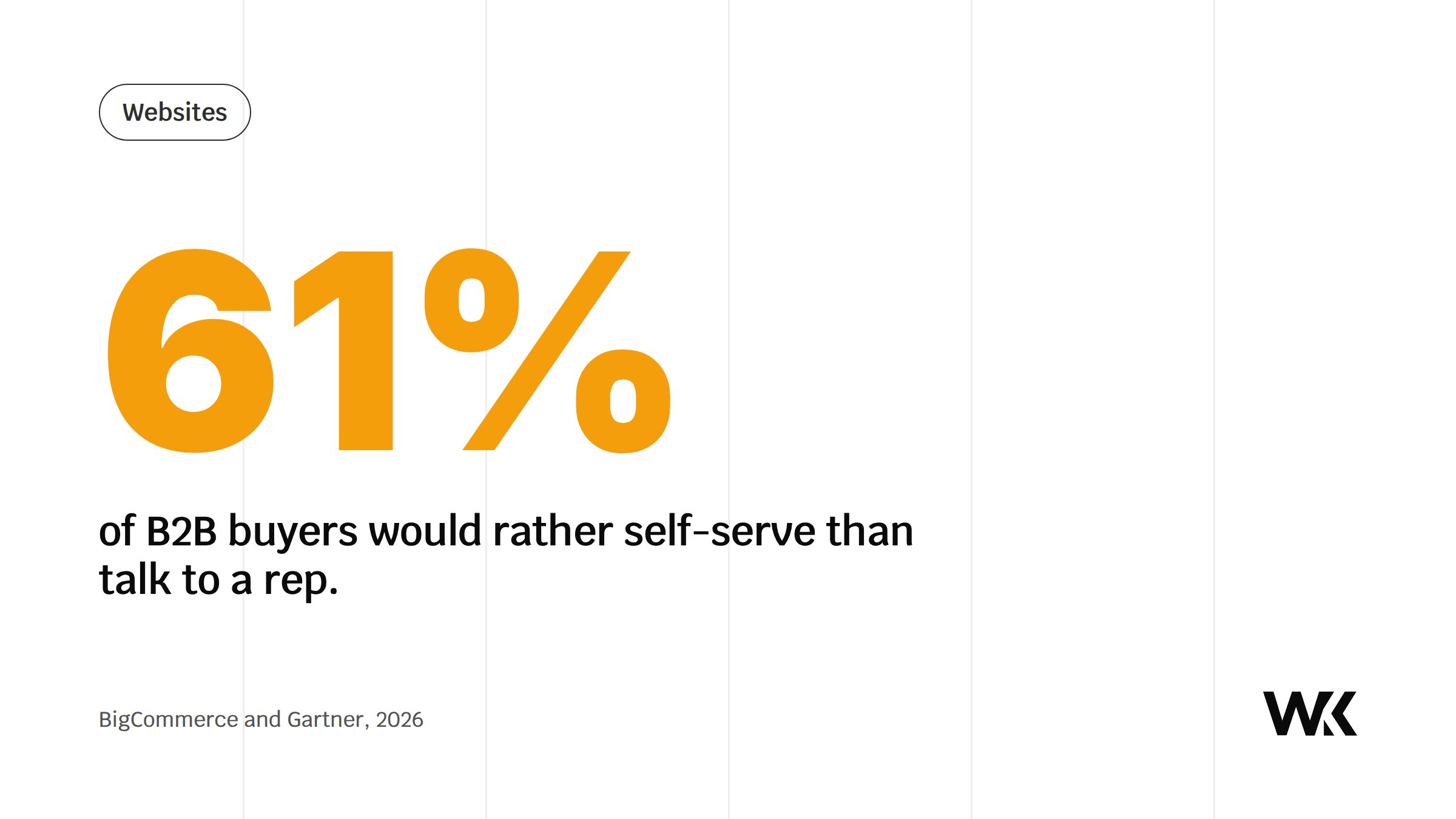
The way engineering and manufacturing gets bought has changed, and many SME websites haven't caught up. B2B buyers now complete roughly 57 to 70 percent of their research online before they contact a supplier, and around 80 percent use digital channels such as search to source in the first place (Demand Gen Report; Gartner, via BigCommerce's UK B2B procurement report, 2026). BigCommerce and Gartner put 67 percent of the buying journey online, and 61 percent of buyers say they would rather self-serve than talk to a rep.
This isn't a consumer habit leaking in. It's how technical buyers work now. As Supply Chain 24/7 put it this year, "customers often research independently before talking to sales, and engineers may need technical files or product compatibility information before they are ready to speak with someone." They're not browsing. They're qualifying you against a brief, before you get a say.
A site that explains what you do but makes a buyer phone up to learn anything specific is losing the job to whoever made the answer easy to find.
What does "self-serve" mean for an engineering site?
Self-serve doesn't mean an online checkout for bespoke machining. It means a buyer can answer their own qualifying questions without sending an email and waiting a day. For an engineering or manufacturing firm, that's a concrete checklist.
The capability detail, not the capability claim. "Precision engineering to the highest standards" tells a buyer nothing. A machine list, the materials you work in, your tolerance envelope, part-size limits, batch sizes and typical lead times tell them whether to bother enquiring. That's the difference between a brochure and a qualifying tool.
The files they need to forward. Downloadable datasheets and spec sheets, your ISO 9001 or AS9100 certificate, capacity statements and, where relevant, a capability deck. Engineers rarely buy alone. They build a case for someone above them, using whatever you give them. Give them nothing to download and you're not in the case.
The proof they can check. An industries page that names real end markets, accreditations shown rather than mentioned, and case work that matches their sector. A buyer vetting you wants to see you've done the thing they need, for someone like them.
None of this needs gating. The moment a buyer has to fill in a form to learn your tolerances, you've turned a quick self-qualification into a favour they have to ask. Most won't.
Why isn't a contact form enough?
A 50-site review of UK engineering and manufacturing websites this year found that most explain what the firm does but don't make it easy for a buyer to judge fit quickly (ALT Agency, 2026). That's the gap in one line. A contact form asks the buyer to commit before you've given them a reason to.
The loss is invisible. A failed form submission shows up in your analytics. A buyer who read half your homepage, found no spec and left shows up nowhere. You can run a thin site for years and conclude that "the web doesn't really work for us", when it worked fine for your competitors.
Is having a website the same as having one buyers can use?
If you've ever said "we already have someone who does the website", this is why that isn't the same as being covered. UK manufacturers know it: customer engagement is now their third highest investment priority (Make UK and PwC Executive Survey, 2026). The brief for an engineering website in 2026 isn't "look professional". It's "let a buyer qualify us at half nine on a Tuesday without picking up the phone".
Speed is part of that brief too. A buyer with four tabs open won't wait for a slow page, so run a free health audit to see how yours performs. If you'd like to talk through what a self-serve version of your site would answer for buyers, get in touch.
Tell us what you're building. We reply within a day.